A Practical Guide to Mindfulness and Helpful Tools
Table of Contents:
Introduction
This article is a work-in-progress reflecting my evolving interests in mindfulness and its practical applications to mindful living. I’ll focus on the secular, psychological idea of mindfulness rather than its spiritual roots, along with free online tools that I’m building along the way.
What is mindfulness?
Mindfulness is variously defined as a practice (i.e. a set of skills and techniques), a mental state, or as a trait.[1] As a form of secular meditation, mindfulness gained prominence in the 1970s following a fusion of Eastern spiritual traditions from both Hinduism and Buddhism with an increasingly humanistic focus in psychoanalysis that influenced modern psychology.[2] This introduction of mindfulness to Western culture is largely credited to Herbert Benson and Jon Kabat-Zinn.
Benson, a Harvard physician, published the book Relaxation Response in 1975 after completing research on Transcendental Meditation (TM), which itself had recently been introduced to the Western world. This research showed an autonomic reaction in TM practitioners, namely a decrease in subjects’ metabolic rate, within a matter of minutes. In subjects with high blood pressure, further studies also showed significantly lowered blood pressure after meditating over many weeks. The book described four “essential components” of meditation necessary to trigger the response although by 1996 only two were found to be essential: a mental device and a passive attitude. Transcendental Meditation’s mantra - silently repeated over and over - served as the mental device, although this could just as easily be a prayer or sound. In this context, the goal of meditation is simple: activate the parasympathetic nervous system, which causes us to relax. We’ll look at this later in more detail.
Kabat-Zinn developed the pioneering Mindfulness-Based Stress Reduction (MBSR) educational program in the late 1970s while working at the University of Massachusetts Medical School, which integrated teachings from yoga with scientific findings. MBSR has been shown to help manage stress, anxiety, pain, and illness, being offered by medical centers, hospitals, and health maintenance organizations around the world.[3] Now a Professor of Medicine Emeritus, Kabat-Zinn describes mindfulness as “the awareness that emerges through paying attention, on purpose, in the present moment, and non-judgmentally to the unfolding of experience moment by moment.”[4]
More generally, the American Psychological Association (APA) defines mindfulness as:[5]
n. awareness of one’s internal states and surroundings. The concept has been applied to various therapeutic interventions—for example, mindfulness-based cognitive behavior therapy, mindfulness-based stress reduction, and mindfulness meditation—to help people avoid destructive or automatic habits and responses by learning to observe their thoughts, emotions, and other present-moment experiences without judging or reacting to them.
Framing this slightly differently, recent research has named Five facets of Mindfulness and Psychological Health comprising this state:[6]
- Acting with awareness (i.e. as opposed to running on autopilot)
- Non-judging of inner experience
- Non-reactivity to inner experience
- Describing (i.e. being able to identify and name feelings)
- Observing (i.e. particularly bodily sensations)
This article will similarly focus on specific mindfulness practices that bring about the mental state and provide free online tools to assist.
https://en.wikipedia.org/wiki/Mindfulness#Meaning_and_definitions ↩︎
https://dash.harvard.edu/entities/publication/73120379-1898-6bd4-e053-0100007fdf3b ↩︎
https://en.wikipedia.org/wiki/Mindfulness-based_stress_reduction ↩︎
https://en.wikipedia.org/wiki/Mindfulness#Psychology_and_secular_mindfulness ↩︎
What are some effective mindfulness techniques?
Box Breathing
Focusing on breathing is one of the best ways to center ourselves, and breathing is one of the most important unconscious (i.e. autonomic) bodily functions that we have.
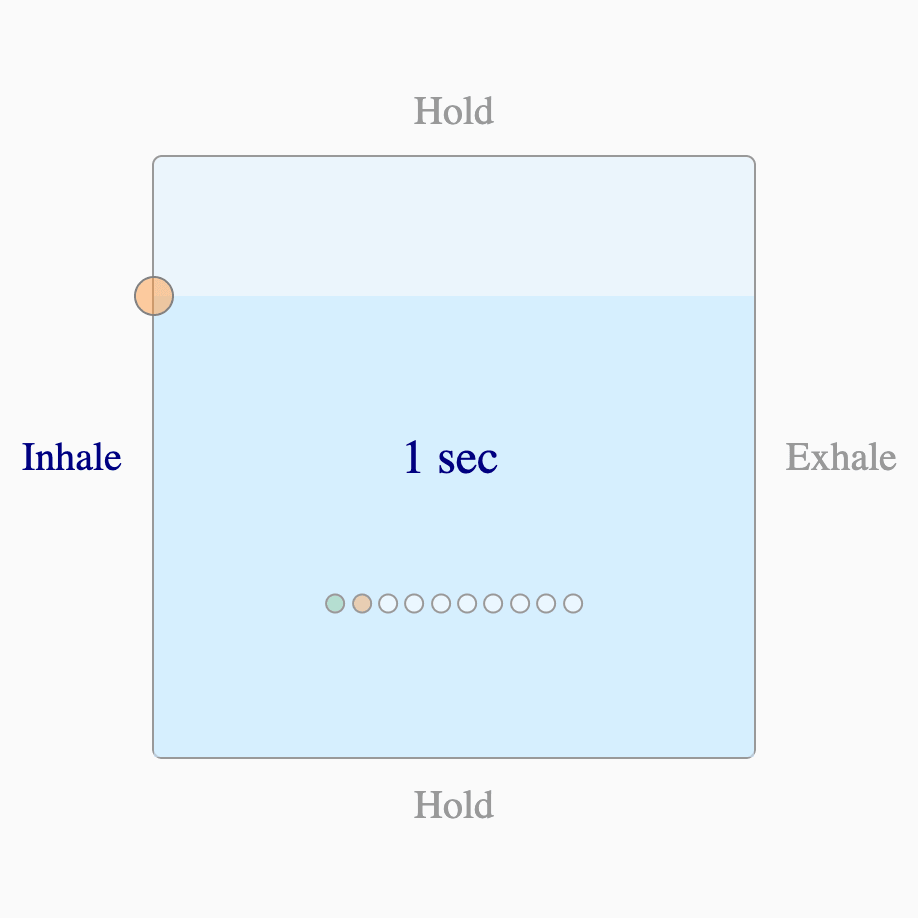
Box Breathing
Practice box breathing and learn how to effectively visualize the technique itself.
If that mental device seems too simple, you might be interested in..
Transcendental Meditation
As discussed above, the Transcendental Meditation movement spurred the earliest research into mindfulness, with their mantras serving as the mental device. However, you may want a bit more choice.
Transcendental Meditation mantras
Generate a unique mantra for Transcendental Meditation and learn about traditional mantras.
Sound Bath Meditation
Another meditation technique is the sound bath, which is focused on using pure sound (as opposed to words) as a mental device.
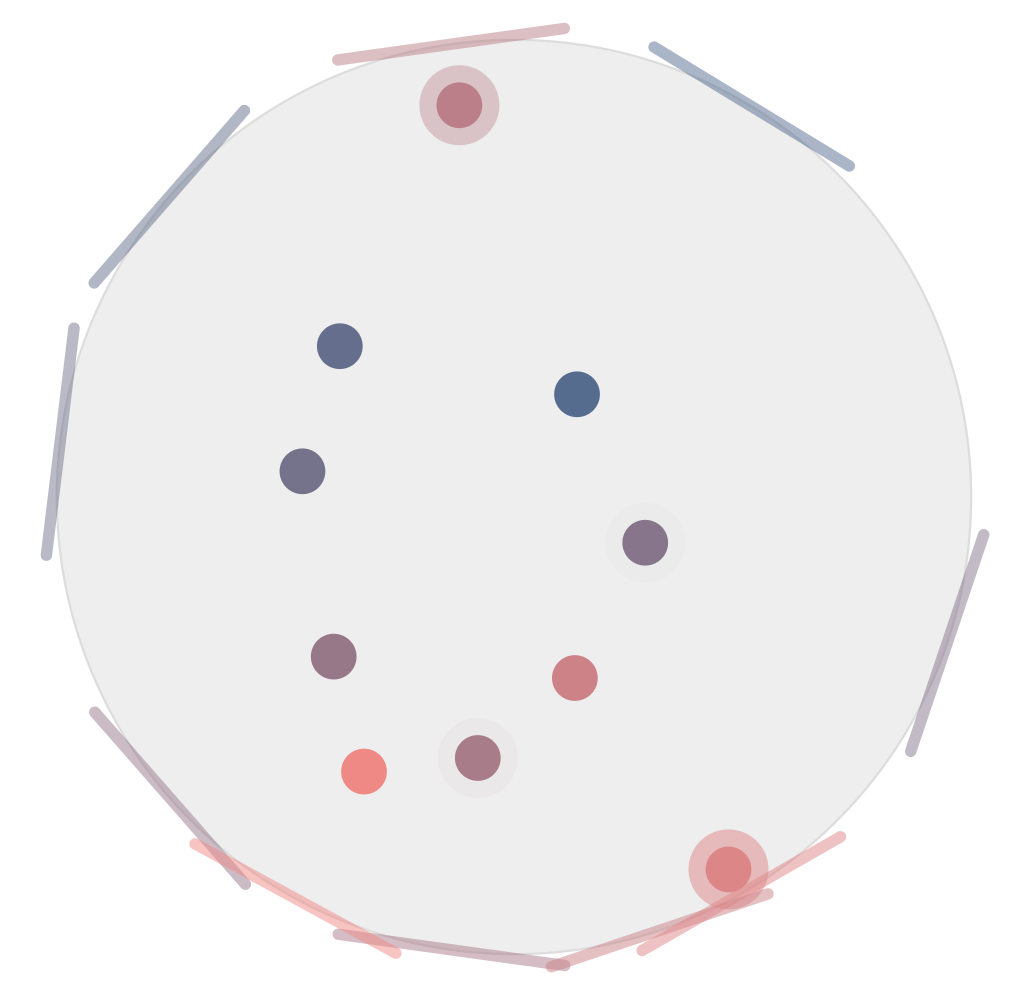
Sound Bath Meditation
Meditate using a sound bath generator and learn about the components of a good sound bath.
What's next?
So many ideas, so little time! Once school lets up a bit, I will complete the section on how mindfulness works, then explore sound as a mental device, and possibly try connecting some dots between mindfulness and better planning in life.
In the meantime, let me know what you think.